“The Biggest Regret of My Life is Not Marrying Diane”: Al Pacino’s Final, Crushing Confession Reveals Decades of Unhealed Loss
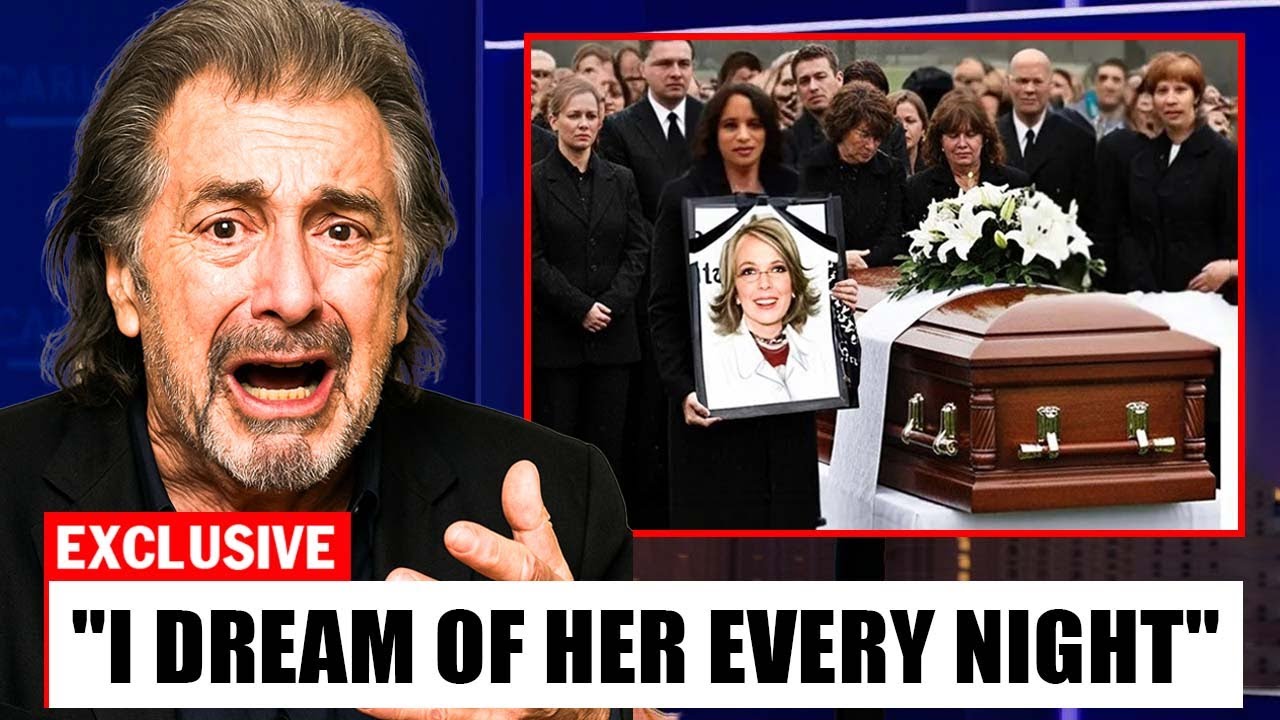
The announcement arrived not with a bang, but with a silent, devastating chill. On the gloomy morning of October 11, 2025, when news of the legendary Diane Keaton’s passing swept across the world, it struck Al Pacino—the cinema monument—like a cold, unavoidable blow. In an instant, the man who had played hundreds of characters, from cold-blooded criminals to fiery lawyers, found himself trembling in the role of a heartbroken man.
He quietly retreated into the vast silence of his Beverly Hills mansion, locking out the world and pulling down the blinds on a Hollywood life too grand to feel truly personal. There, surrounded by the dust of fame, he pulled out old, yellowed photographs and crinkled, handwritten notes. As his fingers brushed across them, a warmth that no longer existed seemed to momentarily touch him, only to recede, leaving him colder than before.
In a moment of profound, unguarded weakness, the great Al Pacino finally surrendered his pride. He choked up, the decades of stoicism dissolving into a raw, gut-wrenching admission that has stunned those closest to him and now echoes across the cinematic landscape: “The biggest regret of my life is not marrying Diane.”
This confession is more than just a passing moment of grief; it is the summary of a life lived in the shadow of one singular, enduring love. At 85, Pacino’s sorrow runs deeper than any tragic role he has ever embodied, revealing that his never-ending life of light and shadow—from the poor Bronx kid to the iconic star—was defined not by the glories he won, but by the one woman he let go.
The Unwritten Love Story of Michael Corleone and Kay Adams
Al Pacino and Diane Keaton’s connection began, fittingly, in the quiet, intense heat of a movie set. In 1972, on the set of The Godfather, a fragile thread began to form between the two future icons. Keaton, then just over 30, was smart, slightly eccentric, and famously witty. Pacino, an unfamiliar face in Hollywood, was quiet, mysterious, and intense. As Michael Corleone and Kay Adams, they played a married couple on screen, but off-screen, their chemistry was undeniable, setting a “rhythm and a temperature” that suited them both, a bond that needed no definition.
They had fought, separated, and always found their way back, never truly losing each other, even when years and other relationships intervened. Their love was complex—a companionship that wandered the same artistic road, built on understanding more than on ties. Yet, time, the greatest teacher, eventually taught Pacino the painful truth: even without ties, some things can be lost simply because you didn’t hold on tight enough.
In re-examining old photos now, Pacino realized his gaze was not just that of a co-star, but “the gaze of a man who loved but never dared to keep.” His current torment is not rooted in a single grand failure, but in the accumulation of a thousand small mistakes: the silences, the missed appointments, the nights he chose a script over a simple call to Diane. He remembered her familiar tease: “You’re too serious to live.” Now, those words replay in his mind, sharp and slow enough to wound.
For decades, the actor believed he had forgotten, when in reality, he had merely learned not to say her name. The older he grew, the more Pacino realized fame was just “dust covering emptiness,” and no one understood him—his fears, his silence, his core—like she did. She was the anchor who made him feel safe amidst the world’s deafening noise, and now, that one real thing is irrevocably gone.
The Anchor Who Saved the Legend
To fully grasp the depth of Pacino’s debt to Keaton, one must look beyond their cinematic chemistry to a dark period in the mid-1980s. Following the massive success of The Godfather, Pacino’s career stalled. He fell into a period of financial instability so severe that the global superstar admitted his bank account held only a few tens of thousands of dollars. The star who had made Hollywood bow its head was on the brink of ruin.
During this professional and personal crisis, Diane Keaton remained by his side, not merely as a lover, but as one of the few emotional anchors he had left. According to close friends, Keaton quietly lent Pacino money when he was nearly broke, saving him from having to borrow from colleagues and lose face. It was not an act of pity, but of pure belief—she knew he was only lost in his own turmoil and would eventually find his way back.
For Pacino, that quiet act of kindness, that rare compassion in the brittle world of Hollywood pretense, left an indelible emotional scar. He later admitted that he would forever owe Diane. In an interview years later, he simply smiled when her name came up and said, “She was there when I had nothing left to hold on to.” That moment solidified a bond deeper than any marriage certificate could establish.
The Silent Ultimatum
Despite their undeniable connection and her unwavering support, their love was never easy. Both were temperamental, independent artists who constantly needed space. Pacino, the man who grew up steeped in poverty and loneliness after his father left and his mother died tragically young, lived by a fear of commitment, a fear of marriage, and even a fear of himself when it came to truly living for someone else.
The fragile belief that their love could evolve into a lasting commitment shattered during the filming of The Godfather Part III in 1990. Their relationship had already weathered many years of turbulence and, finally, Keaton presented him with a silent ultimatum: “Either marry me or we’re done.”
Diane had waited. She had been his anchor, his greatest confidante, and his truest friend. But when the time came to finally build something lasting, Pacino faltered. He remained silent.
It wasn’t a loud, dramatic breakup filled with tears and yelling. It was the quiet, devastating end of two grown people who understood that staying together under unfulfilled promises would only hurt them more. Pacino watched her leave, neither agreeing to marry nor trying to hold her back. The man who could embody the greatest dramatic roles on earth could not deliver the simple line that would have saved his deepest love.
Keaton walked away, carrying with her nameless years and a love story without an ending. She never married, adopting her children Dexter and Duke and dedicating herself to art and family, building the life she wanted without needing a man by her side. Pacino, too, never married, his subsequent high-profile relationships becoming a string of brief romances interwoven with major film roles, but none could ever make him stop the way Diane did.
The Final, Silent Goodbye
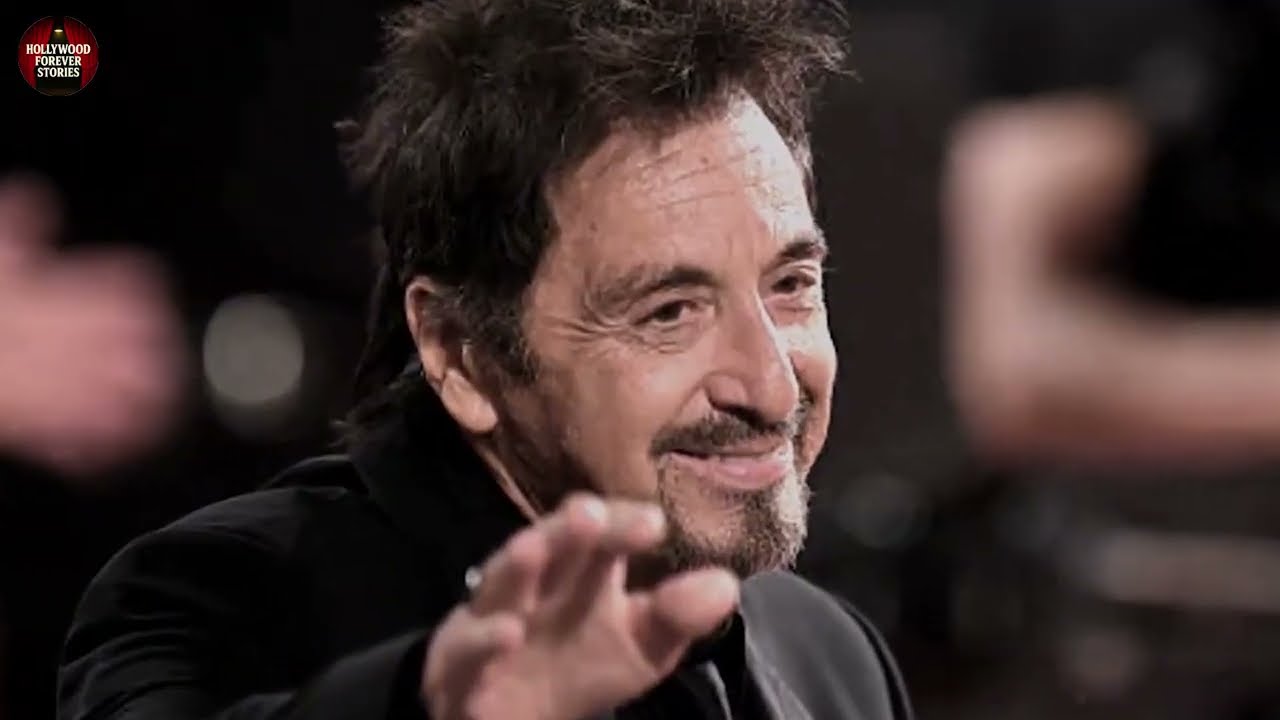
In the days that followed the devastating news, Pacino’s grief became his own private world. His house was drained of light and sound, and he refused to go out or open the door. Every morning, he sat before the bookshelf where Keaton’s photo stood—messy hair, smiling sideways as if mocking the world. That smile, which once both charmed and infuriated him, was now the only light he had left.
When his manager came knocking, holding the invitation to the memorial service, Pacino stared at the paper for a long time before setting it down. “No,” he said softly, his voice hoarse but resolute. “I can’t see her like that. I want her laughing.”
To him, Diane Keaton could not be reduced to white flowers, eulogies, and a final farewell. In his memory, she would always remain vibrant, defiant, and beautiful—the woman who walked into a room and made the silence around him less heavy. He chose to honor her not through the rituals of mourning, but by preserving the one image that mattered most to him.
Pacino leaned back in the dark, allowing the tears to finally roll, unhidden. He felt a strange tenderness, as though she were still there, watching him with that familiar gaze—part affection, part reproach, part smile. In that moment of quiet, enduring sorrow, he understood: though they would never meet again, her memory, and the crushing weight of his regret, would remain in every role, every breath, and every corner of the room.
The life of Alfredo James Pacino is a symphony both glorious and tragic, where the light of genius always coexists with the shadows of loneliness, addiction, financial betrayal, and unhealed loss. From a Bronx boy who had to sleep in movie theater seats to the cinematic monument who conquered Hollywood, he has tasted every note of triumph and despair. But in the end, his greatest tragedy is not rooted in money or fame. It lies in the simple, profound fact that the great actor, who perfected the art of performance, was unable to take on the most important role of his life: the role of a husband to the only woman who ever truly saw him. He traded happiness for immortality, and now, he lives with the cost.