The Ultimate Betrayal: How Rick Ross’s Pivot to 50 Cent—and a Deeper Snitching Scandal—Torched Big Meech’s Legacy
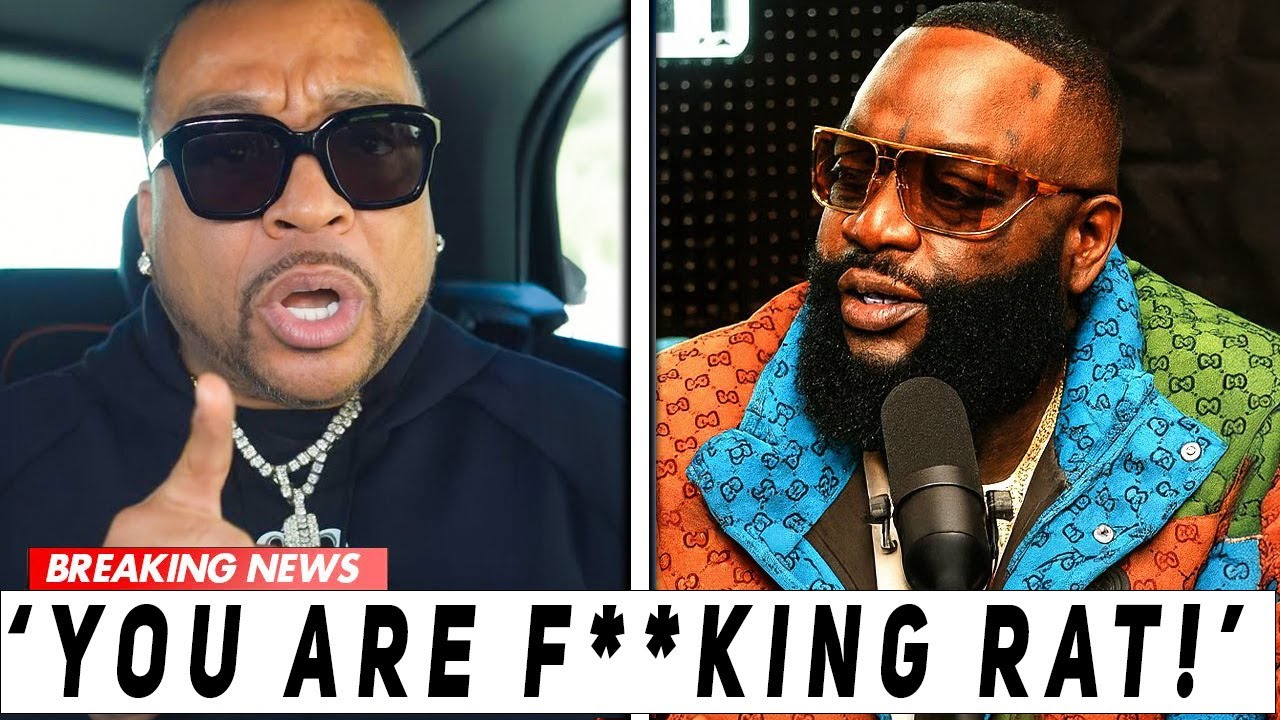
The narrative of the triumphant return is one of the most powerful and enduring myths in American culture, particularly in the unforgiving landscape of hip-hop and street lore. For Demetrius “Big Meech” Flenory, the anticipation surrounding his release from decades behind bars was monumental—a promised re-entry into a culture that had mythologized him and his Black Mafia Family (BMF) empire. Yet, what was envisioned as a coronation has quickly devolved into a public, humiliating unraveling, not just at the hands of his long-time nemesis, 50 Cent, but due to a seismic betrayal by his chosen ally, Rick Ross, and a dark shadow from his past that suggests a profound violation of the most sacred street codes.
The spectacle currently captivating the industry is not about a comeback; it is a cautionary tale about misplaced loyalty, strategic manipulation, and the enduring power of a rival who never forgets.
The False Dawn of an Alliance
Upon his initial steps back into the spotlight, Big Meech faced a critical choice: align with the man who had resurrected his legacy, 50 Cent (through the highly successful BMF series on Starz), or forge a new path with 50’s bitter rival, Rick Ross. Meech chose Ross, a strategic blunder that would prove catastrophic. Ross, initially appearing fully invested, showered Meech with promises—rebuilding the empire, lucrative opportunities, and a return to cultural dominance. This alliance immediately created waves of tension, setting the stage for an inevitable explosion.
Ross’s commitment, however, proved to be as flimsy as a handshake in the wind. When the promised business arrangement—hinted at potentially involving a high-budget BMF film to “outshine” 50 Cent’s series—collapsed, and the financial prospects evaporated, Ross executed a cold-blooded pivot. He abandoned Meech and, in a calculated move of pure self-interest, began rekindling ties with 50 Cent, the very man he once despised.
Meech was quickly reduced from an honored partner to a transactional pawn. As the layers of the drama are stripped away, it becomes clear that Meech was never Ross’s priority. He was a strategic tool, leveraged only to humiliate 50 Cent and attempt to fracture the alliances surrounding the BMF name. When that plan failed, Ross vanished, leaving Meech isolated, stranded, and confronting the harsh reality that in the world of high-stakes entertainment, personal loyalty is always sacrificed for financial gain and strategic advantage.
The Humiliation of the Canceled Concert
The tangible fallout of this fractured alliance centered on Meech’s much-hyped ‘Welcome Back’ concert, an event intended to cement his re-entry as a cultural milestone. The signs of trouble, however, were present long before the final curtain. Whispers of a hollow lineup circulated, with major artists allegedly backing out. The anticipation faded fast, proving that a reputation alone is not enough to command the loyalty of the industry.
The ultimate humiliation arrived just two hours before showtime. The Ammeris Bank Arena abruptly canceled the event, citing “unforeseen circumstances.” No warning, no explanation, just a public defeat that instantly cemented Meech’s fall from grace. He was left in full damage control mode, scrambling to understand why support had vanished and allegedly pointing the blame squarely at Ross, the man who promised the world only to leave him stranded.
50 Cent’s Orchestrated Victory Lap
While Meech was left dealing with the wreckage of a failed concert, 50 Cent was executing a perfect, calculated game—watching the pieces fall exactly as he predicted. Long before the concert was official, 50 Cent had already declared it would never happen, seeing the cracks in Meech’s foundation that others ignored.
In classic, ruthless 50 Cent fashion, he wasted no time turning Meech’s failure into his own victory lap. He posted the canceled event flyer online like a trophy, pairing it with a sarcastic, mocking caption that dripped with confidence: “I had nothing to do with this please stop calling my phone.” Doubling down on the pettiness, he then pretended to apologize to disappointed fans, a move that was “pure villain behavior dripping with sarcasm.” The final, most telling blow came when a fan directly accused him of orchestrating the shutdown. Instead of denying it, 50 reposted the comment with a slick message: “I apologize for your trip to Miami but you’ve been playing with me.”
The message was clear: 50 Cent didn’t just win; he orchestrated the entire narrative, proving he stays two steps ahead of everyone else. He is not merely playing a game; he is controlling the flow of power and perception, a mastery he now uses to publicly dismantle his former ally.
The Dark Allegations of a Deeper Betrayal

The current drama, however, is merely a smokescreen for the deeper, more corrosive allegations that truly define Big Meech’s downfall: the accusation of having violated the street code—the sin of snitching. According to circulating street reports and disturbing claims from those close to the situation, the whispers of betrayal against Meech predate the Ross drama, centering around his prison release.
At the core of the allegations is Tammy Cowins, an individual Big Meech considered a close friend but who also had a reputation as a federal informant. Multiple accounts suggest Cowins played a crucial role in negotiating a deal that significantly reduced Meech’s lengthy sentence. In a federal case of that scale, the consensus in the streets is clear: early release comes at a steep cost, requiring a significant sacrifice.
That sacrifice, the allegations claim, was Dion “Cuffy” Gatling, a longtime friend and business partner of Meech. Cuffy’s daughter, Tamara Gatling, publicly stated that her father was set up by Big Meech himself. In 2011, Meech reportedly reached out to Cuffy with the idea of a BMF movie, but behind the offer, Tamara claims, was a betrayal already in motion.
The puzzle pieces came together once investigative documents identified a key confidential informant, CS1, as Tammy Cowins. Though Cowins was the one wearing the wire, many concluded that her involvement was a calculated move, one Meech himself likely orchestrated, using his own trusted power of attorney to connect Cuffy with a known informant. This allegation of trading loyalty for freedom casts an insurmountable shadow over Meech’s reputation, providing 50 Cent with the foundational truth he needs to justify his relentless pursuit.
The Crumbling Empire and the Cost to the Next Generation
The consequences of this multi-layered betrayal are now hitting the next generation. The biggest blow came with the unconfirmed rumors regarding Lil Meech, the supposed heir to the BMF empire and the lead actor in the television series. Reports suggest that Season 4 of the BMF series is in jeopardy, a direct casualty of the turmoil.
The situation became profoundly humiliating when 50 Cent exposed private text messages from Lil Meech online, turning his desperation into a viral spectacle. In the messages, Lil Meech desperately pleaded for 50 Cent’s loyalty, yet simultaneously defended his father’s ties to Ross, even admitting that Ross was quietly funding Big Meech’s bills while the series remained on hold. This financial revelation highlights Ross’s manipulative brilliance: by keeping Big Meech financially dependent, he positioned himself as the puppet master, deepening the rift and further isolating 50 Cent from the legacy he helped elevate.
The drama also evolved into a personal attack, with 50 Cent questioning Big Meech’s role as a father, pointing out that he was the one who paid for Lil Meech’s acting lessons and created the career platform that turned him into a star. In 50’s eyes, Meech’s homecoming and his subsequent missteps have done more harm than good, ultimately ruining opportunities that had been carefully built for his son.
What was once an unstoppable brand built on strength, power, and influence now looks fractured and hollow. The collapse of the BMF legacy serves as a stark reminder of how quickly everything can fall apart when trust is broken and pride takes over. Big Meech, once an untouchable figure, is now portrayed as a pawn within his own crumbling empire, with Ross holding the financial leash and 50 Cent calmly watching the downfall unfold without lifting a finger. For 50 Cent, this is not just about a grudge; it is about proving a fundamental point: betrayal is a sin he never forgives, and he is willing to burn down the entire bridge—even his own $150 million Stars deal—to prove it.